±5 minute read

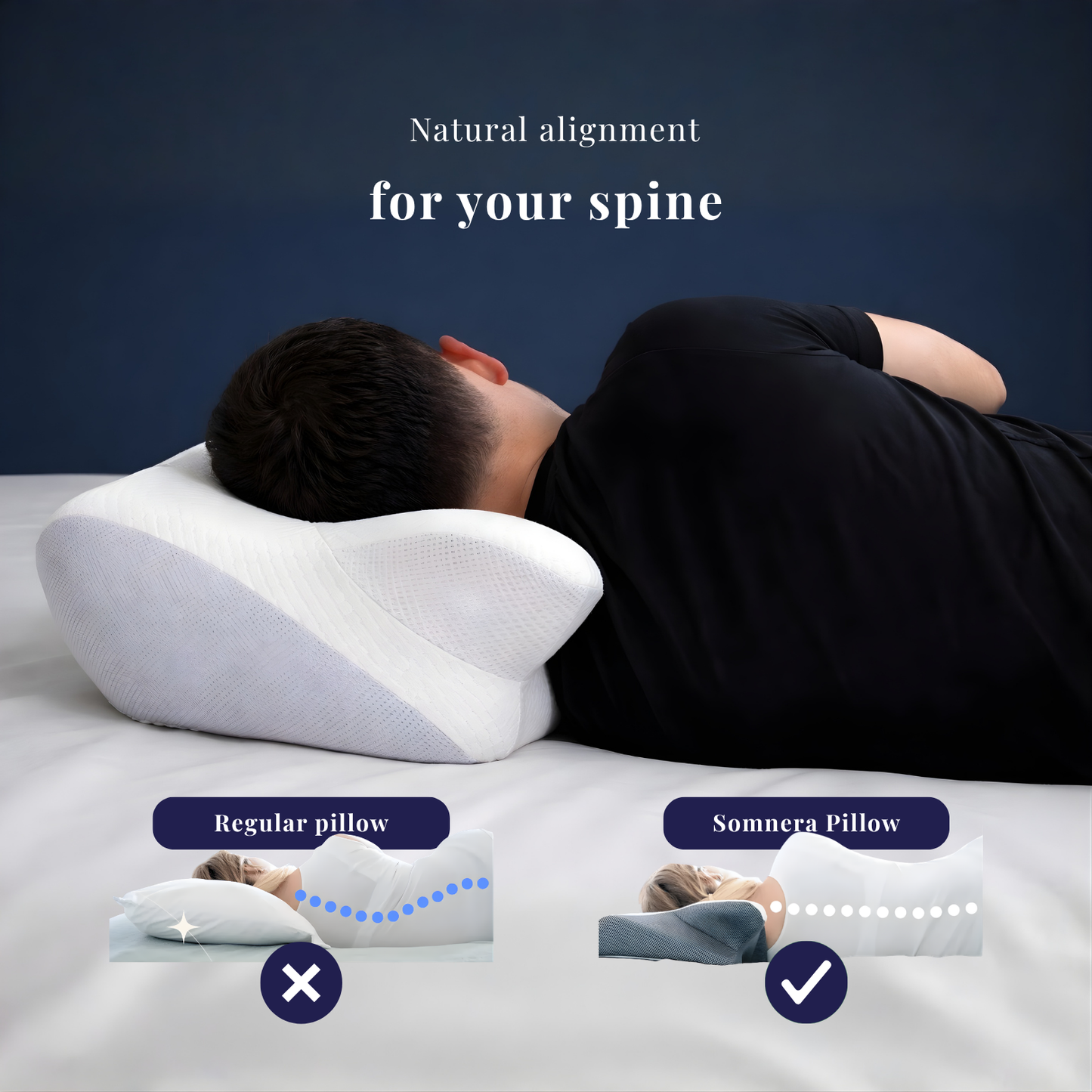
  • Lie on your side or back on a regular pillow and look at the space between your neck and the pillow. On most pillows there is a hollow there. Your head is supported, but your neck is not. It hangs in that gap all night, and the muscles around it work overtime to hold it up.

  • This is not a small detail. Research shows that pillow height and shape directly change the position of your cervical spine, which is the part of your spine in your neck. A pillow that does not fill that gap pulls the neck out of its natural line and increases stress on the joints and muscles for hours at a time (Ergonomics research, National Library of Medicinebiomechanics study on pillow height and cervical alignment).

  • You spend roughly a third of your life on your pillow. If your neck is out of line for those hours, it does not matter how good your posture is during the day. Every night undoes the work.

Why you wake up stiff, and why it fades during the day

Muscles that spend the night bracing do not get to rest. By morning they are tired, tight and sore. That is the stiffness you feel when you get up, and it is why the first hour or two of the day is the worst. Once you move around, take a hot shower and get the blood flowing, the muscles slowly release. Then the next night the same thing happens again.

This cycle is extremely common in people who work at a desk. Studies of office workers show that between 42 and 63 percent deal with neck pain every year, far more than the general population (cross-sectional study of office workers, PubMedprospective study on risk factors, PMC). A day of screen work loads the neck, and a night on the wrong pillow makes sure it never recovers.

Those morning headaches may not start in your head

Many people with neck problems get headaches and never connect the two. There is a name for this: a cervicogenic headache, which means a headache that is caused by the neck but felt in the head. According to Harvard Medical School, these headaches start from the joints and soft tissue of the upper neck and radiate up, often on one side (Harvard Health: A headache that starts in your neck).

They are more common than most people think. Up to 20 percent of chronic headaches are estimated to come from the neck (StatPearls, National Library of MedicineCleveland Clinic). If you wake up with a dull headache that seems to sit at the base of your skull, your pillow is one of the first places to look.

  • Painkillers quiet the alarm, but they do not touch the cause. The same goes for massages and physio sessions. They can genuinely help loosen the muscles, but if your neck goes back to hanging in that gap the same evening, the problem is rebuilt overnight. That is why the relief never lasts, and it is why you have probably concluded that nothing works.

  • Even buying a new pillow usually fails, and there is a reason for that too. Most standard pillows are filled with down, feathers or loose fibre. They feel fine in the shop, but they compress under the weight of your head and slowly sink during the night. In a well-known study where side sleepers tried five different pillow types for a week each, feather pillows performed worst of all, producing the most waking symptoms, while shaped and supportive pillows performed best (Gordon et al., Journal of Pain Research).

  • Harvard Health gives the same warning from the other side: a pillow with the wrong height holds the neck bent all night and can cause exactly the morning pain and stiffness you know so well (Harvard Health: Say good night to neck pain).

  • A large review of pillow research found that pillow design has a real effect on neck pain, on how you feel when you wake up, and on how well your spine keeps its natural line during sleep (systematic review and meta-analysis, Musculoskeletal Science and Practice). The pillows that help share one feature. They support the neck itself, not just the head, so the gap disappears and the muscles can finally switch off.

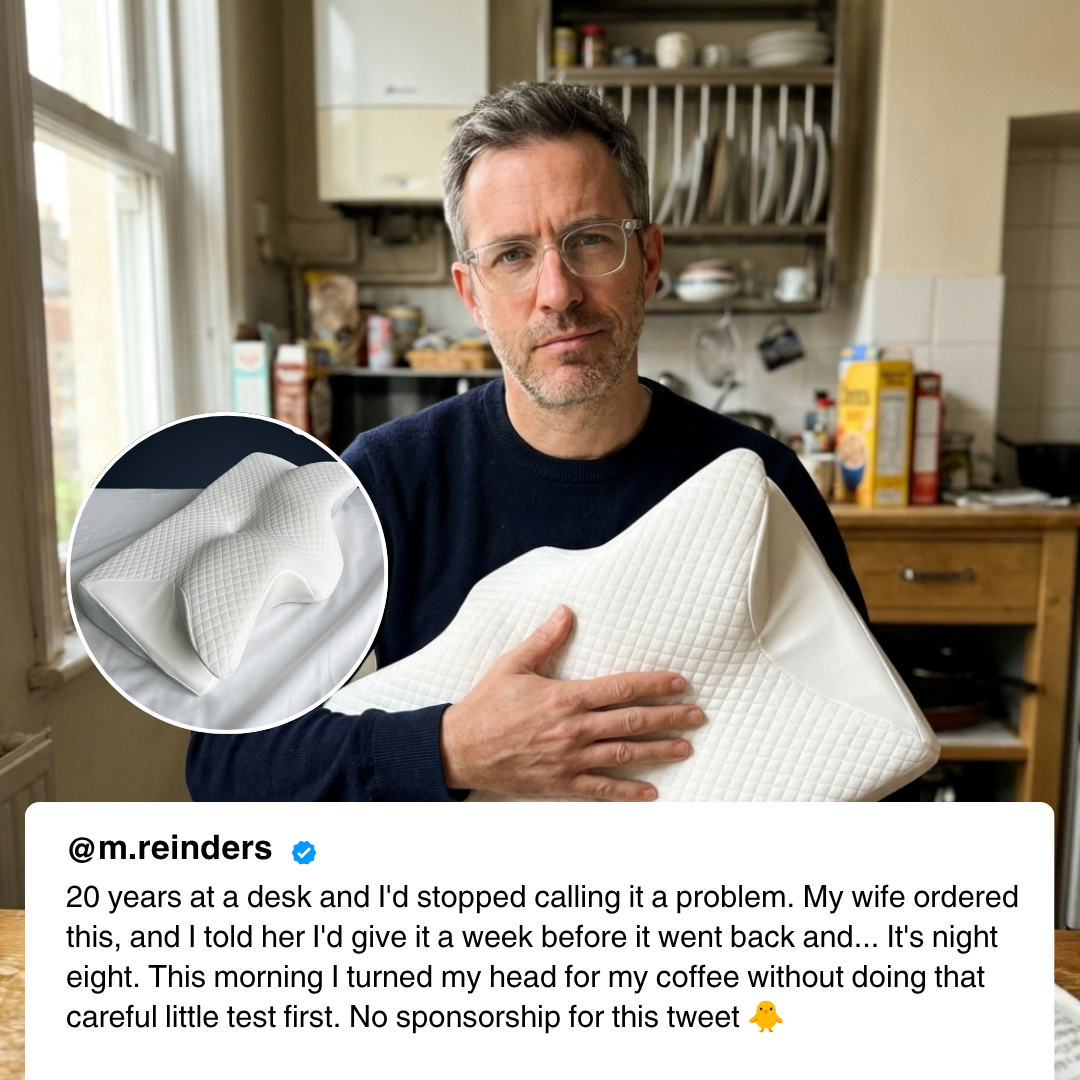
  • That is exactly what the Sevra orthopaedic pillow is built to do. Its contoured shape follows the curve of your neck and fills the space a flat pillow leaves open. The memory foam adapts to your position, whether you sleep on your back or your side, and it does not sink flat during the night the way down and fibre pillows do. Your neck stays in line for the full eight hours, so your muscles rest instead of bracing.

  • No appointments. No pills. No exercises you will abandon after a week. Just a different surface under your neck, every night, doing quietly what all those other solutions could not.

  • One honest note: give it time. Your neck has spent years adapting to the wrong support, so the first nights on a contoured pillow can feel unusual. That is normal, and it passes. Most people settle in within a week or two. With our 101 nights risk-free trial you have all the time you need to feel the difference, and if it is not for you, you send it back. You risk nothing except more mornings like the ones you have now.